Church Wedding Backdrops: What Actually Works in a Sanctuary
A church is the one venue where the backdrop is not the main visual event, and treating it like a ballroom is the fastest way to lose the booking. The building already has architecture, colour and focal points. The job is to frame the couple without competing with the space or breaking a rule nobody wrote down until you break it.
Can you put a backdrop in a church?
Usually yes, but freestanding only and with the officiant's approval in advance. Almost no church permits fixing anything to walls, pillars, altar rails or historic fabric, so a wall-mounted solution is off the table before you start.
The approval is not a formality. Churches vary enormously in what they allow, and the decision often rests with one person — a vicar, a parish administrator, a trustee — rather than with a venue policy document. Get it in writing, and get it before you quote, because a refusal after booking is a refund rather than a negotiation.
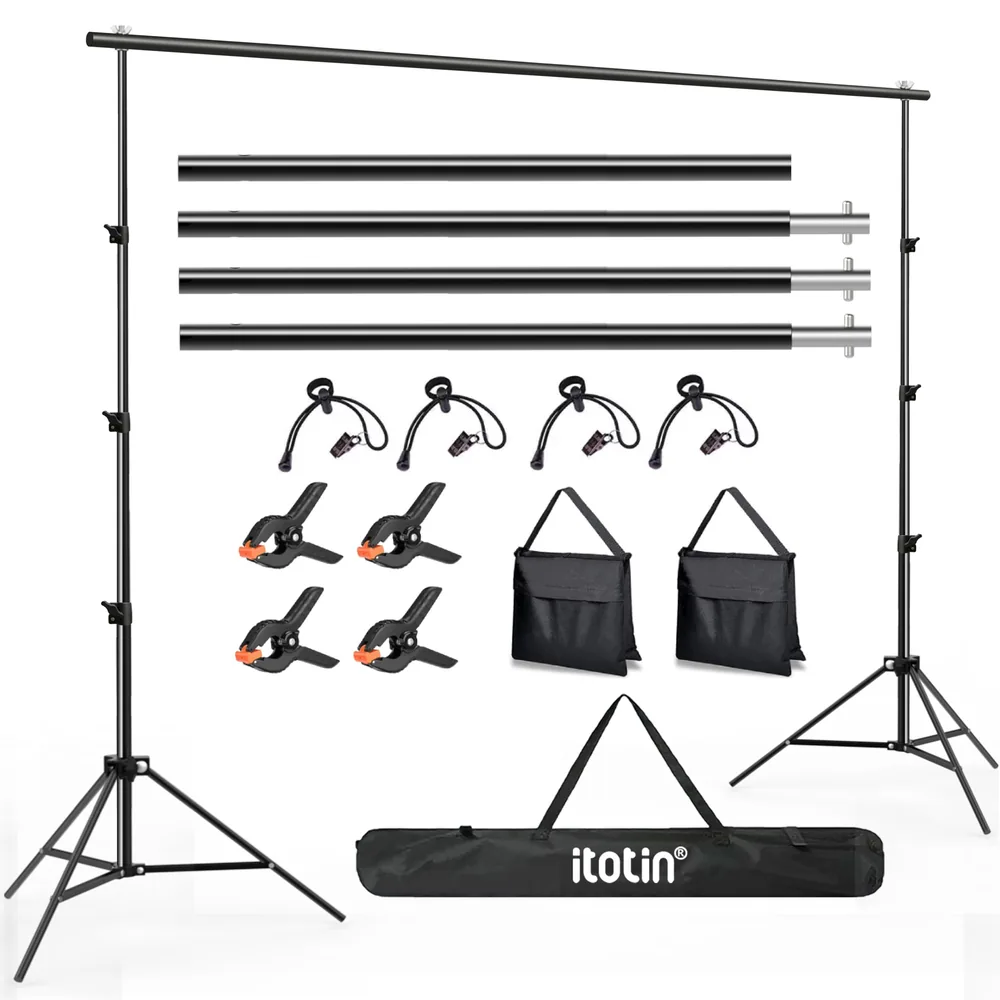
Listed and historic buildings are stricter again. In those spaces the practical constraint is not just fixings but weight and floor protection, because a heavy stand base on a stone or tiled floor can be refused outright. A freestanding frame in the $99.00 to $149.00 range that assembles without tools is the format most likely to be accepted.
- Ask the officiant, not the couple, and get the answer in writing
- Assume no fixings to walls, pillars, rails or any historic surface
- Check floor protection rules on stone, tile and timber
- Confirm whether the backdrop must be removed immediately after the ceremony
What size backdrop works with a high church ceiling?
Go wide rather than tall. A church ceiling is far higher than any portable stand can reach, so competing on height is a losing game — an 8ft backdrop under a vaulted roof reads as undersized no matter what you put on it.
The fix is to change what the backdrop is measured against. A wider frame such as a 10x9ft at $149.00 relates to the width of the chancel or the aisle rather than to the ceiling, and the eye stops making the vertical comparison. Our arch and welcome frames run $129.00 to $149.00 across 4 structures.
The second technique is to accept the building's scale instead of fighting it. A pair of narrower frames flanking the couple, or a floral arch that echoes an existing stone arch, works with the architecture. This is the opposite of the small-venue problem, where the room is too tight — here the room is too generous, and a single small object floating in it is the failure mode.
How much aisle clearance does a church backdrop need?
Leave the full aisle width clear and keep the stand base out of the processional route entirely. The bride, the officiant, the photographer and often a videographer all move through that space during the ceremony, and a projecting foot is a genuine trip hazard rather than an inconvenience.
Church aisles are frequently narrower than modern venue walkways, and pews fix the width permanently. Measure the clear span between pew ends rather than the nominal aisle width, then position the backdrop so the base sits behind the line where guests and the wedding party actually walk.
Round and narrow formats earn their place here. A hoop stand at $129.00 has a base directly beneath the ring rather than spread across a wide rectangle, and a 4x7ft narrow frame at $119.00 to $129.00 tucks into a chancel corner. Both give a photographable feature without occupying the route.
- Measure the clear span between pew ends, not the nominal aisle width
- Keep all stand feet behind the processional route
- Never block a side chapel entrance or a fire exit
- Check the photographer's shooting position before finalising placement
What backdrop styles suit a church ceremony?
Floral and fabric read as appropriate; sequin and mirror finishes usually do not. A church congregation reads reflective party materials as out of place in a religious setting, and that judgement affects the couple's family more than it affects the couple.
Silk floral is the safest category by a wide margin. Our flower walls and arches run $129.00 to $179.00 across 13 designs, and greenery-led arrangements in particular sit comfortably against stone and timber. Draped fabric at $39.00 to $89.00 is the other reliable choice, because it echoes altar cloths and vestments rather than nightclub decor.
This is a genuine commercial constraint rather than a matter of taste. A rental operator whose entire inventory is shimmer panels cannot serve church bookings, which is a large share of the wedding market in many regions. One floral arch and one fabric option opens a category that sequin stock alone cannot reach.
How long do I get to set up in a church?
Assume a short, fixed window and build for tool-free assembly. Churches frequently host services, rehearsals and other bookings around a wedding, and the access time you get is often measured in tens of minutes rather than hours.
Plan the install as though you will be asked to work around other people, because you often will. That rules out anything requiring a ladder over pews, extensive cable runs or a build sequence that cannot be paused halfway. It also means arriving with the frame pre-sorted rather than sorting components on a stone floor.
There is usually a strike deadline too. Many churches require everything removed straight after the ceremony so the building is clear, which means the same crew that built it must return within the hour. Quote that second visit; it is real labour and it is routinely forgotten in the price.
Should I reuse the ceremony backdrop at the reception?
Yes, and it is where the margin on a church booking comes from. A ceremony that lasts under an hour cannot justify a full setup on its own, but the same frame relocated to the reception serves a whole evening.
The practical requirement is a format that survives a mid-day move and a second build with no spare parts. Frames that assemble tool-free and floral panels that attach with ties rather than fixings both qualify. Anything that needs precise alignment on the first build will not go up cleanly a second time under time pressure.
For modular walls the maths still applies at the reception, where an 8x8ft build is 81 panels at 30cm each, supplied 24 to a set. At a minimum of 2 sets and $1.59 per panel for solid colours, carrying spares for the second build costs very little against a missed reception setup.
- Quote the relocation as labour, not as a free extra
- Choose tool-free formats that go up cleanly twice in one day
- Carry spare fixings and panels for the second build
- Confirm reception access time before agreeing to the move
Frequently asked questions
Can you put a backdrop in a church?
Usually yes, but freestanding only and with the officiant's written approval beforehand. Almost no church allows fixings to walls, pillars, altar rails or historic fabric, and listed buildings may also restrict weight and floor contact.
What size backdrop suits a high church ceiling?
Go wider rather than taller. No portable stand competes with a vaulted roof, so a wide frame such as 10x9ft at $149.00 relates to the chancel width instead, and the eye stops comparing it to the ceiling.
Are sequin backdrops appropriate for a church wedding?
Usually not. Congregations read reflective party materials as out of place in a religious setting. Silk floral at $129.00 to $179.00 or draped fabric at $39.00 to $89.00 are the styles that reliably suit a sanctuary.
How much clearance does a church backdrop need?
Keep the full aisle clear and all stand feet behind the processional route. Measure the clear span between pew ends rather than the nominal aisle width, because pews fix the usable width permanently.
Need a quote for your project? Send us your target quantity and destination port and we will come back with landed cost, not just unit price.