Inflatable vs Glass Disco Balls: Which Should You Buy?
The disco ball came back and never really left. It now appears at weddings, birthday parties and corporate events, not just nightclubs. But the version most rental companies buy today is not the heavy mirrored-glass sphere of the 1970s, and the reason is entirely practical.
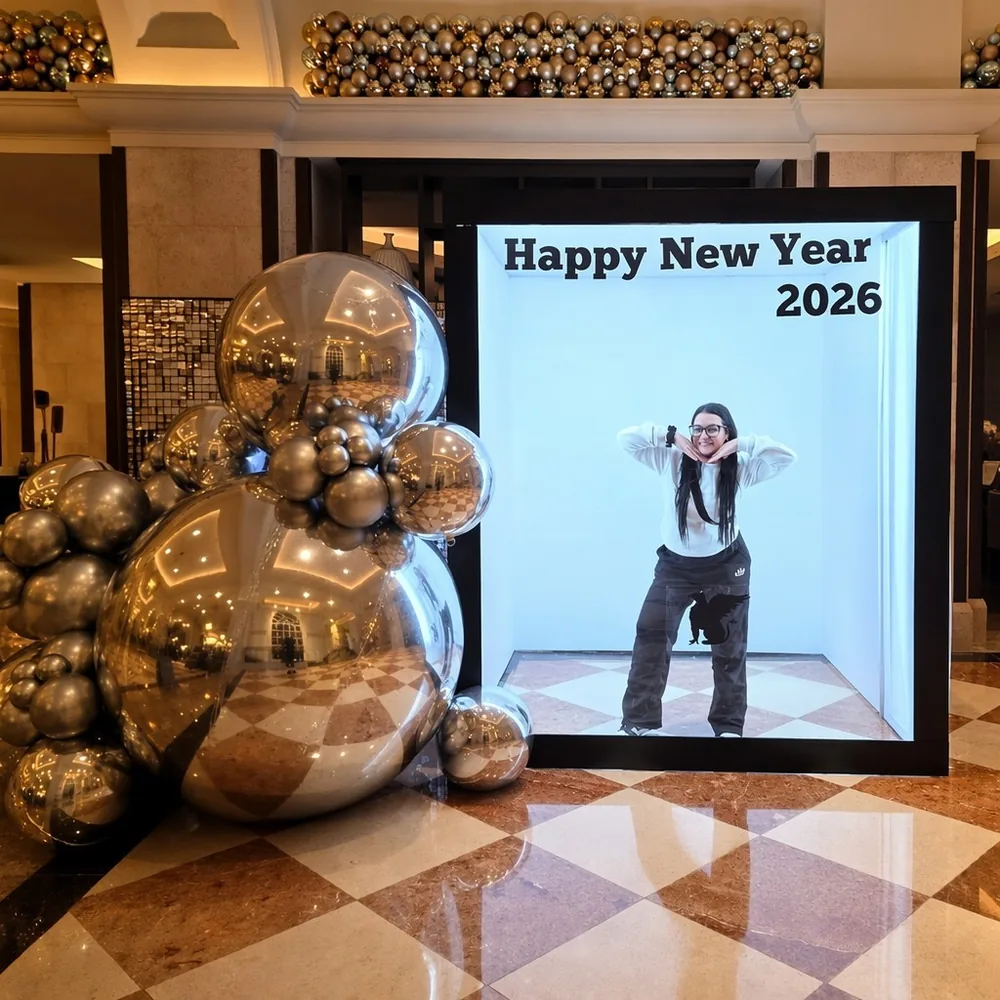
What is an inflatable disco ball?
An inflatable disco ball is a mirrored surface applied to a durable inflatable core, so a large sphere ships flat and inflates on site in minutes. It produces the same reflected-light effect as a rigid mirror ball without the weight.
This matters more than it sounds. A traditional glass mirror ball is heavy, fragile and expensive to freight, and every one of those attributes works against a rental business. The inflatable version changes the economics of the same visual effect.
Can you hang a disco ball from a ceiling safely?
An inflatable ball can be suspended from ceilings, tension grids or trees where a traditional glass mirror ball would be unsafe, because it weighs a fraction as much. That is the single biggest practical advantage.
Rigging anything above guests is a safety question before it is an aesthetic one. A heavy glass sphere requires a fixing point rated for the load and, in many venues, sign-off from the venue's technical staff. A lightweight inflatable widens the range of places you can hang it — including marquees, garden trees and function rooms with no rigging infrastructure at all.
The rule does not change, though: only suspend from a point the venue confirms is structural. Ceiling tiles, light fittings and decorative beams are not fixing points regardless of how light the object is.
Why do inflatable disco balls cost less to ship?
Because they ship deflated and flat. Freight on a rigid sphere is priced on volume, not weight, and a large hollow ball is almost entirely air — you pay to ship empty space across an ocean.
For a wholesale buyer importing a container, this is the difference between a viable product and one where freight erases the margin. It also means you can order several sizes and colourways in a single shipment without the volumetric cost escalating the way rigid spheres would.
How much warehouse space do they need?
Deflated units store in a fraction of the space of rigid spheres, which is a practical advantage for rental operators managing limited warehouse capacity.
Storage volume is a real cost that rarely appears in a purchase decision. A rental company working out of a garage or a small unit hits a physical ceiling on what it can own, and that ceiling constrains what it can offer. Products that store flat let you widen the catalogue without renting more space — the same argument that makes modular panels attractive over fixed backdrops.
Which disco ball colours should a rental company stock?
Silver first, then gold. Silver reads as neutral and suits weddings, corporate events and nightclub setups equally, while gold carries warmth for celebrations and anniversaries. Both are $79.00 at wholesale.
Colour choice follows the same logic as backdrop stock: neutral first, statement pieces once the base is earning. Our range covers silver, gold, black, red, purple, hot pink and rainbow, with prices from $79.00 to $129.00 across 9 products at MOQ 2.
Black is the specialist pick worth noting. It reflects light without adding colour cast, which suits nightclub and evening events where coloured lighting is already doing the work and a silver ball would compete with it.
- Silver: neutral, works across weddings, corporate and club events
- Gold: warm, suits celebrations, anniversaries and festive seasons
- Black: reflects without colour cast, best under coloured stage lighting
- Rainbow and hot pink: statement pieces for birthdays and themed parties
Do disco balls need lighting to work?
Yes. A mirror ball produces no light of its own — it only redistributes light that hits it. Without a directed light source it is simply a shiny sphere.
This is the most common oversight when a client books one expecting the effect they have seen in photographs. A single focused beam creates the classic scattered-dot pattern; ambient room lighting creates almost nothing. If you rent disco balls, quote a pin spot or narrow-beam fixture alongside them, or the client will be disappointed by a product that was working exactly as designed.
The related search demand supports this: buyers looking for disco balls are frequently also looking for the lighting to go with them. Bundling the two is both better service and a larger order.
Where do inflatable disco balls fall short?
They are a soft-surface product, so they are vulnerable to punctures and sharp edges in a way rigid spheres are not. Handled carelessly on load-in, or stored against something sharp, an inflatable will fail in a way glass will not.
The mitigation is procedural rather than technical: store them deflated in their bags, keep them away from tools and cable ties in the van, and carry a spare on high-value bookings. This is the same discipline that applies to any inflatable event product.
For a permanent installation in a fixed venue — a club ceiling that never changes — a rigid mirror ball remains the better choice. The inflatable wins where the product moves, ships and gets stored repeatedly, which describes almost all rental work.
Frequently asked questions
Are inflatable disco balls as effective as glass ones?
Visually, yes — the mirrored surface produces the same reflected-light effect. The difference is structural: inflatables weigh far less, ship flat and store deflated, at the cost of being puncture-vulnerable.
Can I hang an inflatable disco ball from a tree or marquee?
Yes, and this is a key advantage. Their low weight allows suspension from ceilings, tension grids or trees where a glass mirror ball would be unsafe. Always confirm the fixing point is structural.
What size disco ball do I need?
Scale to the room and the viewing distance rather than to a specification. A sphere that fills the frame in a small function room will look undersized in a ballroom. For rental use, two sizes covers most bookings.
How much do wholesale disco balls cost?
Our inflatable mirror balls run $79.00 to $129.00 across 9 products at MOQ 2, which lets a rental operator sample a colourway before committing to volume.
Need a quote for your project? Send us your target quantity and destination port and we will come back with landed cost, not just unit price.