Photo Booth Backdrops: What a Rental Business Should Buy
A photo booth business lives or dies on the images it produces. The camera and lighting get most of the attention, but the backdrop is what fills the frame behind every guest, and it is the part clients actually notice in the photos they post afterwards.
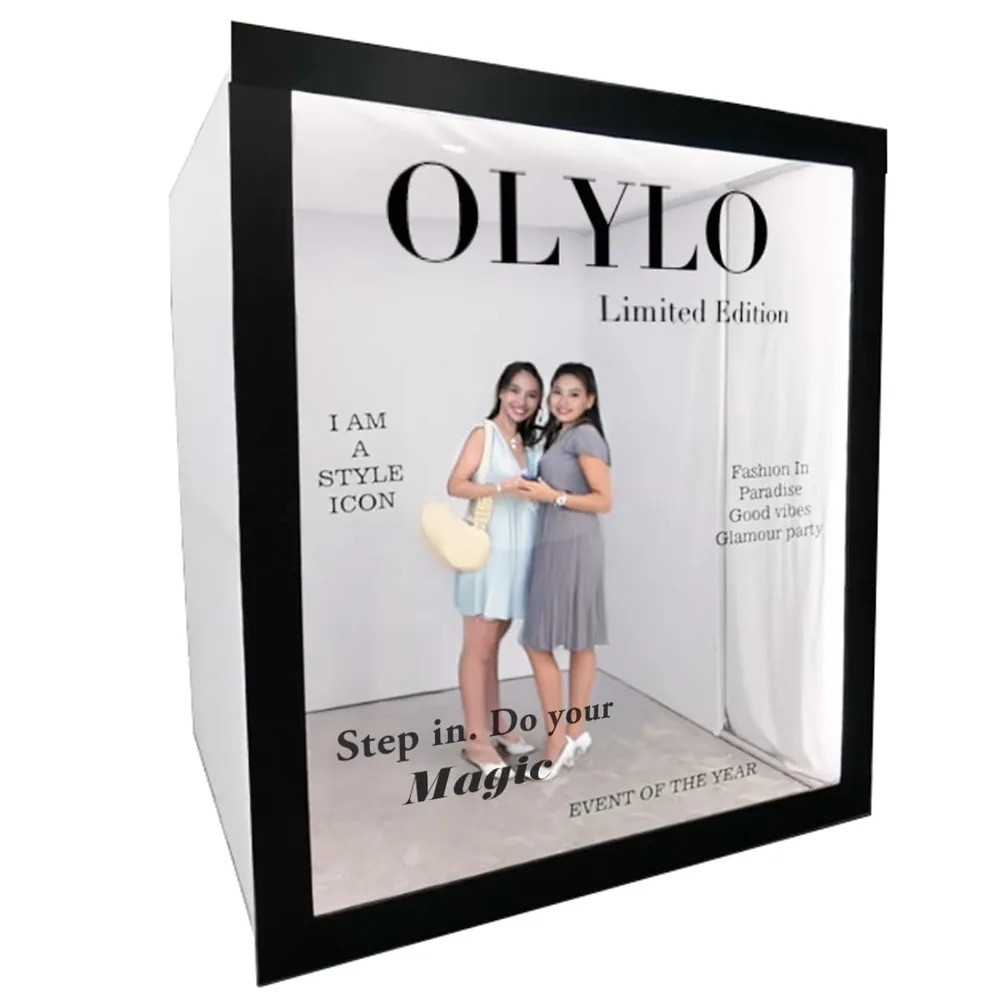
What size backdrop does a photo booth need?
6.5x7.5ft covers the standard open-air booth setup with two to four people in frame. Go to 8x8ft if you regularly shoot groups, and 3.9x6.5ft works for a compact booth in a tight venue corner.
The size is dictated by the camera position, not the room. Most booth cameras sit 6 to 8 feet from the subject, and at that distance a 6.5ft-wide backdrop fills the frame with a little margin for people stepping sideways. Narrower than that and guests at the edge of a group shot end up with the venue wall visible behind them, which ruins the composite.
Height matters for standing group shots. A backdrop that stops below head height on a tall guest shows the ceiling, and no amount of post-processing fixes it cleanly.
Why do magazine-cover backdrops work so well?
Because they give guests a reason to pose. A magazine-cover frame turns a plain photo into a themed one, and themed photos get posted, which is free marketing for the booth operator.
The mechanic is simple: the frame creates a defined space that guests instinctively step into and perform for. A blank wall gives no such cue, and the resulting photos are noticeably flatter. Our magazine photo booth sets run $49.00 to $199.00 across 7 configurations, including a full set with letters and a frame-only option for operators who already own covers.
Should I buy a full set or just the frame?
Buy the frame once and the covers as consumables. The frame is durable hardware that survives years of hire; the printed cover is what changes with the season, the client or the occasion.
This is the same economics as backdrop stands generally. A frame-only purchase starts lower, and each additional look costs only the price of a new cover rather than a whole new unit. For an operator running weddings in summer and graduations in spring, two covers on one frame is materially cheaper than two complete sets.
The exception is a booth business running multiple simultaneous bookings. If two events overlap every weekend, you need two frames regardless of how many covers you own.
- Full set: fastest to deploy, everything matched, best for a first booth
- Frame only: cheapest way to add a second look to existing hardware
- Extra covers: seasonal and occasion variety without new structures
What backdrop material photographs best under booth lighting?
Matte or lightly textured surfaces. Photo booths use direct flash or a ring light at close range, and any glossy surface reflects that light straight back into the lens as a hotspot.
This is why printed fabric outperforms vinyl for booth work, and why sequin panels behave differently from what people expect. Sequins scatter light into many small highlights rather than one large reflection, which reads as sparkle rather than glare. A flat glossy vinyl sheet does the opposite and produces a blown-out patch in the middle of every shot.
Test any new backdrop with your actual booth lighting before its first paid booking. The same material can look completely different under a ring light versus a softbox.
How many backdrops does a photo booth business need?
Three is a practical working set: one neutral, one themed and one seasonal. That covers most bookings without filling the van or the storage unit.
The neutral backdrop is the workhorse and books most often. The themed one — a magazine cover, a shaped frame — is what clients choose from your portfolio and what justifies a higher fee. The seasonal one gets swapped out as the calendar moves and prevents your marketing photos looking identical all year.
Resist buying more until utilisation says otherwise. Track which backdrop went out on each booking; after one season the data tells you exactly what to add and what to retire.
What fails first on a photo booth backdrop?
Creasing on fabric and edge damage on printed panels. Both come from transport and storage rather than from use at the event.
Fabric covers should be rolled rather than folded — a fold line runs right through the middle of every photo and is very visible under direct flash. Printed rigid panels chip at the corners when stacked loose in a van, and a chipped corner shows in wide shots. Both problems are solved by a proper storage bag and a habit of packing the same way every time.
Budget for replacing covers periodically. They are consumables in this business, not permanent assets, and a tired-looking backdrop costs more in lost bookings than a new cover costs to buy.
Frequently asked questions
What size backdrop is best for a photo booth?
6.5x7.5ft suits standard open-air booths with two to four people. Use 8x8ft for regular group shots and 3.9x6.5ft for compact setups in tight venues.
Should I buy a photo booth backdrop as a full set or frame only?
Buy the frame once and treat covers as consumables. Frame-only options start at $89.00 and let you add seasonal or themed looks without buying complete new units.
Which backdrop material works best with photo booth lighting?
Matte or lightly textured surfaces. Glossy vinyl reflects flash directly back as a hotspot. Printed fabric and sequin panels both handle close-range flash well.
How many backdrops should a photo booth business own?
Three covers most operations: one neutral, one themed and one seasonal. Track which one goes out on each booking and expand based on real utilisation rather than guesswork.
Need a quote for your project? Send us your target quantity and destination port and we will come back with landed cost, not just unit price.